Mercedes-Benz Ponton
Buyer's Guide and Checklist


For those of you not familiar with the Mercedes-Benz Ponton models, here is a good place to get acquainted with them.  First, a quick reference guide.   Then, where to get help with a Ponton and some sage advice from other Ponton owners and finally, a buyer's checklist can be found at the bottom of this page.

Ponton Spotter's Quick Reference Guide:

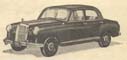
Mercedes-Benz Ponton 4 cylinder sedan
4 cylinder sedan
(W120 / W121)

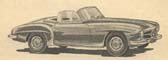
Mercedes-Benz Ponton 4 cylinder roadster
4 cylinder roadster
(W121)

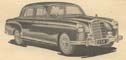
Mercedes-Benz Ponton 6 cylinder sedan
6 cylinder sedan
(W105 / W128 / W180) 

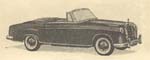
Mercedes-Benz Ponton 6 cylinder cabriolet
6 cylinder cabriolet
(W128 / W180)

Type W120 180 and 180D (including the later "a", "b" and "c" variations):
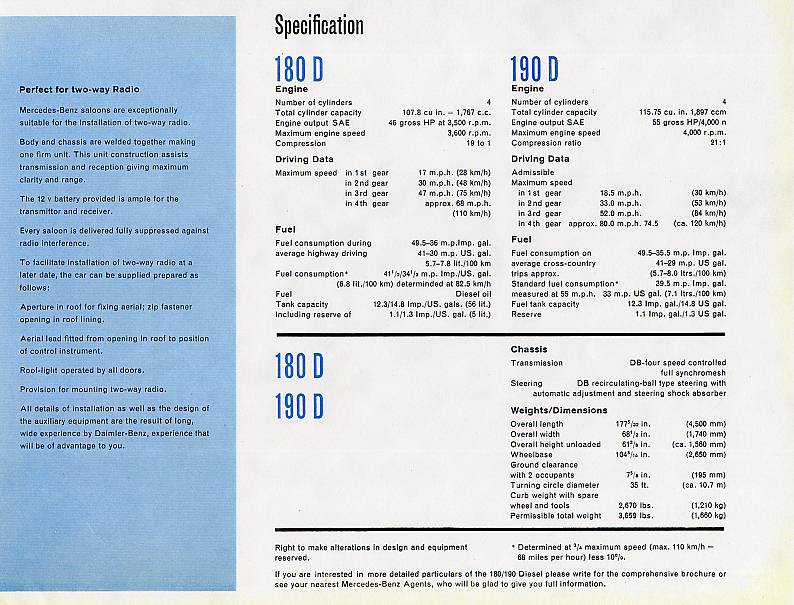
A practical 4 door sedan with a 4 cylinder engine of approx. 1.8 liters. Single Solex carburetor for the gasoline engines. Bosch fuel-injection on the diesel engines.  Fun cars, but a bit underpowered for freeway and regular highway use, especially the diesels.  Incorporates Bakelite (an early plastic) for interior window surrounds and the fascia (dashboard).  Diesel engine fuel consumption was proclaimed to be 30-41 miles/US gal.  With a 14.8 (US gallon) tank, that's over 600 miles between fill-ups.  You are not going to believe the diesel's 0-100 km/h (62 mph) acceleration data.  How does 40 seconds sound?  Some incredibly high mileages have been achieved and documented with the Mercedes-Benz diesel engine. The shorter wheelbase of the 4 cylinder Pontons (especially with gasoline engines) can give the car a more sporty feel than the 6 cylinder models.

Type W121 190 and 190D (including the later "b" variations):
A 4 door sedan, 4 cylinder engine, approx. 1.9 liter.  Single Solex carburetor on the gasoline engine. The Bosch fuel injection pump was used on the diesels. Same body as Type 180 with slightly more bright-work body trim located at the base of the side windows.  Includes Bakelite window surrounds, fascia and glove box, but also sports a slightly upscale wooden trim strip over the instrument cluster.  More spry, better freeway and highway driving.  Fuel consumption on the gasoline engines was listed as being about 20-26 miles/US gal.  The diesel models are quaint and historic, but may be best suited for the hard-core enthusiast. Popular extra-cost options on the 4 cylinder Pontons included radios, and large sliding fabric sunroofs.

Type W105 219:
A larger 4 door sedan with a 6 cylinder gasoline engine (approx. 2.2 liter).  Single Solex carburetor.  Good performance.  Slightly larger than the Type 190.  The body has the longer engine compartment of the Type 220a/220S.  From the center door post ("b-pillar") back, it has the body of the Type 190.  In other words, more power than the 190, but not as much leg room in the back seat as the Type 220S and 220SE sedans.  The 219 features a Bakelite fascia (dashboard) and interior window trim but also has a contoured wooden strip above the instrument cluster (similar to the Type 190).  Originally, it was conceived to be the most affordable way to put a 6 cylinder Mercedes-Benz sedan into your stable.

Type W180 220a:
An admirable 4 door sedan with a 6 cylinder gasoline engine of approx. 2.2 liters.  Single Solex carburetor.  More power and a sprightly feeling.  Body about the same as the Type 220S.  Same amount of body trim as the 220S except the front fender trim is absent.  A bit longer than the Type 219 with longer rear doors. Finally, this is a Ponton model with a full compliment of wood interior trim.  Fabric sunroofs and radios were popular extras.  All models in the range have a large trunk for stowing fitted luggage, which was another extra-cost option.

Type W180 220S:
The 220S series includes a 4 door sedan, a 2 door coupé and a 2 door cabriolet.  All body styles utilize the same 6 cylinder gasoline engine (approx. 2.2 liters) with dual Solex carburetors. Very good performance.  Top of the Ponton series line.  The coupés and cabriolets have the same engine and drivetrain as the sedans, only different bodies, more interior wood trim, leather upholstery and exterior chrome trim. 0-62mph: 17seconds. Top speed: 100mph.  Expect to dig way down into your wallet for the coupé and cabriolet when found in good condition as they have more real collector value.  As the old saying goes, when the top goes down, the price goes up.

Type W128 220SE:
Includes a 4 door sedan, along with the 2 door coupé and cabriolet.  Same body styles as the Type 220S but with a 2.2 liter Bosch fuel-injected gasoline engine.  Again, lots of chrome, wood and leather interior trim.  The fuel-injected Pontons are the rarest of the breed. Same top speed as the 220S models but 2 seconds quicker from 0 to 62mph.  Popular on all Mercedes Ponton models were the Becker Mexico radio and the extra large sliding fabric sunroof by Webasto.

Type W121 190SL:
Good performance and traditional Teutonic build quality, combined with somewhat exotic styling led this 2 seat roadster to become quite popular when it was introduced.  Not surprisingly, it continues to have a strong following today.  Many specialists and clubs can provide access to parts and technical information.  The 190SL utilizes the same W121 chassis and drivetrain as the Type 190 sedan, but the Type 190SL coupé-cabriolet-roadster had a maximum cruising speed of 110 mph because of the tuning done to the in-line 4 cylinder engine (approx. 1.9 liters) with twin horizontal Solex carburetors.  A canvas cabriolet roof was standard.  Popular options included a hardtop, fitted luggage and a radio. Among the most collectible and expensive models in the range. The 4 speed manual transmission shift lever was, unlike other Ponton models, mounted on the floor.

Variants:
Uncommon and low production body style variations built for specific markets like South Africa (reference the "bakkie" pick-up), ambulances, hearses and station wagons.  These utility vehicles were sent off the Daimler-Benz factory grounds to be finished by smaller, third party coach builders in Germany.  Based on both the 4 and 6 cylinder Ponton chassis.

Notes:

  1. For more detail on production numbers and historical perspective, see the Overview of Mercedes-Benz Ponton Models and Production page.

  2. The 6 cylinder Pontons could be equipped with a Hydrak automatic clutch.

  3. Any model in the range, including diesels, could be special ordered with leather upholstery, a radio, Webasto sunroof, fitted luggage, reclining front seats, power assisted brakes, and more.

  4. Original fuel consumption data are sometimes overlapping and seemingly contradictory depending on the source.

  5. All Pontons except the Type 190SL used a 4 speed manual transmission with the shift lever mounted on the steering column.  The 190SL had the shift lever mounted on the floor.

  6. A steel Webasto sunroof was also an option on the sedans and the coupé. This is quite rare, as most opted for the sliding fabric sunroof.


How and where to get help with a Ponton

So, you've been bitten by the three pointed star bug.  You saw a nice old Mercedes-Benz classic, and you found out that your object of desire is included in what is known as the Ponton generation.  How much of a risk will it be to own such an old vehicle?  Are spare parts available?  If so, where can you get them?  Does anybody, including your local M-B dealer or independent repair shop, still know anything about these cars?  Where can you go for service or technical help if you need it "down the road"?  Relax, don't worry.  You are not alone.

The owners of Mercedes-Benz Pontons are quite fortunate because there are still many places to get new and used spare parts, literature, manuals and technical advice.  Even today, 50 years later, the DCAG factory in Stuttgart offers many of these parts for sale, brand new.  You may also order parts at your local authorized Mercedes-Benz agent.  In addition, there is a healthy global after-market network of specialists that cater to the needs of the M-B Ponton owner.  These facts alone should make any potential Ponton buyer feel more comfortable with the idea of ownership.

You may decide to perform the maintenance and repair work on your Ponton yourself.  This will save you money (not time, most probably) and provide you with the satisfaction of knowing you did the work yourself.  There are certainly plenty of sources for original technical documentation, shop manuals, DIY (do-it-yourself) articles, as well as internet-based help forums that are populated with fellow owners who are both willing and able to help you, when you occasionally get stuck in the weeds.

On the other hand, as far as out-sourcing the regular maintenance and repair of your Ponton model, you will have varying degrees of success finding a competent dealership or independent shop in your area that is willing to work on your prized possession.  A lot depends on your specific location.  In regions where the climate is kind and gentle to older cars, you stand a better chance of locating a good specialist.  If there is no specific experience with Ponton models, then perhaps you will find a shop with general experience on vintage Mercedes-Benz or other German vehicles.  In some cases, depending on the region, a 10 year old Mercedes will be thought of as an "old Mercedes".  When you walk into the shop with a 50 year old Mercedes, even some specialty shops will turn you away.  So, before you decide to buy, check with your local shops and dealership/s if you plan to send all of the maintenance and repair work out.  On the positive side, the Pontons are uncomplicated by today's standards and should not pose any unusual challenges on a mechanic that is familiar with the methodical process of troubleshooting, repair and maintenance.


Sage advice from current Ponton owners:

Keep looking until you find the car that's right for you. Everyone has their own requirements for what condition they want the car to be in. Some people want the challenge of a basket case. Some want a car that might need a bit of work. Others, like me (and maybe you), want a car that is a nice driver right now and doesn't need a whole lot to get it in decent shape. The absolute best value almost always comes from a car that the previous owner has done an extensive restoration on. He will never be able to recoup all that he has put into the car and, if he wants to sell it, will have to sell it at what the market will bear, which is usually a fraction of what he has spent on it. As such, these cars will be at the very top end of the asking prices, but they will generally be a car that will cost you little to maintain, may actually end up being cheaper in the long run and will probably hold their value pretty well if you keep it in good condition. If you decide to get a car that needs some work, please pick one that needs engine work and not rust repair. Once rust begins to gain an upper hand, the repairs can get to be very expensive very quickly. Engine work on the other hand will usually have a known cost. I would strongly recommend that you also have someone who knows these cars do a pre-purchase inspection for you. Best is probably to pay someone a hundred or so to get it on a lift and check the car thoroughly to find any hidden problems. Depending on where you live, you may also have the benefit of living near a whole lot of Ponton owners who might be able to take a look at a prospective purchase for you.

- Len Sokoloff / September 27, 2003

If possible, drive the car.  It should be smooth, including the diesels.  Listen carefully to the engine.  It should be smooth, no clicks or clacks or squeaks or squeals.  During the drive, there should be no unusual noises from the engine, transmission or rear axle.  They should all be almost silent except the engine which makes the usual type running noise.  On a start does it shudder or shiver?  At low speeds, next to brick wall, are there any squeaks or squeals or grinding noises from the wheels or drive shaft?  Almost all mechanical parts are available, some body parts are available, some new and some used.  Chrome trim is very hard to find in any condition.

- Richard Priebe / September 28, 2003


Finally, the Ponton Buyer's Checklist:

The original version of the Mercedes-Benz Ponton buyer's checklist was compiled in 1996 by Len Sokoloff with a lot of help from Ray Ilich and Ron van Seventer.  It helped Len make an objective analysis of the 1959 Type W180 220S cabriolet he found for sale at that time.  It must have worked, because he ended up buying the car and has been enjoying it ever since.  Some items on the checklist will only be found on the Type 220S cabriolet model.  As time permits, this list will be developed into a guide that will include tips for buyers of other Ponton models, including diesels.  When ever possible, the list will be made more specific with supporting text, hyperlinks and photographs.  This way, potential buyers of any Mercedes-Benz Ponton model may use this as a reference before they reach for their check book and take the plunge.

- Jeff Miller / editor@mbzponton.org / September 28, 2003 / Comments, suggestions and corrections are welcomed.

Check for Rust:

  1. Panel that helps support the decorative panel under the rear bumper.

  2. Chrome plates at end of doors (cabriolet model only). Check bottom edge of doors too.

  3. Inside the grill shelf.

  4. In the gas filler tube.

  5. Check the gas tank for leaks.

  6. In the spare tire well.

  7. In the soft top storage area (cabriolet model only) and under the edge of the leather that is glued to the base and surround. You can also see this from the trunk.

  8. Under the battery and under the passenger's foot area where battery acid would leak. Check the driver's side foot area too.

  9. Check the floor pans from above and below.

  10. Check the fronts of the rear springs for rust.

  11. Check the jacking ports for any body bends or wrinkles.

  12. Inside the bumpers.

  13. On the dipstick.

  14. Under the tail lamp lenses. Consider removing the lenses and inspect the inside housings. Check top of light assemblies.

  15. Inside the hubcaps.

  16. In the dome lamp fixture chrome surfaces, clock surround and on the escutcheons (decorative nuts) on the wiper switch and lighter on the top of the fascia (dashboard).

  17. On the seat adjusters and chrome seat trim.

  18. Under the trunk mat. Check lateral trunk seam, to quarter panels and joint between rear fender and quarter panel.

  19. Under the rear seat.

  20. In the wheel wells. Check behind the splash shield of both front wheel wells.

  21. Directly aft of the front and rear wheels.

  22. Top of the headlight buckets. Reach up on top of the headlight buckets in front of the turn signals.

  23. Front fender edge doubler at the door jamb.

  24. Check for rust in the frame box rails that run under the car front to back.

Soft Top: (cabriolet model only)

  1. Is it original? Look for MB star.

  2. Type of material of top and liner. Should be top, horsehair pad and liner. Top bows should not be visible.

  3. Match color and material to swatches.

  4. Check for dome light and switch on passenger side armrest.

  5. Does it have a zippered rear window?  It is supposed to.

  6. Check for smooth operation of top mechanism.

  7. Does it fold all the way down into the boot?

  8. Is there a boot cover?

Body Condition:

  1. Look for funny wrinkles in the body, especially on the leading edges of the doors.

  2. Check the front end especially for previously repaired damage.

  3. Check body panels with a magnet.

Chrome:

  1. Check for six foot chrome strip on each rocker panel. (coupé and cabriolet only)

  2. Check overall condition of chrome - any major dents?

  3. Check bumper uprights.

  4. Check for bumps where chrome is attached with studs.

  5. Thin chrome pieces that run along the middle of the rear quarter panel from the door to the tail lights are very expensive. Make sure they are present. (220a, 220S and 220SE only)

  6. Check for chrome pieces over windshield (cabriolet only).

Interior:

  1. Check general condition of interior.  Cloth is prone to wear out faster than leather or vinyl.

  2. Check doors and map pockets (certain models).

  3. Check to make sure seats are not foam-filled or overstuffed.  Seat padding should be firm.

  4. Any bow repairs needed for top? (cabriolet model only).

  5. Gauges:  Do they all work? Speedometer, odometer, manual gas reserve (only certain models).

  6. Wood condition:  Any re-veneering needed?  Any missing or broken pieces?

  7. Does rear seat fold flat if it has the optional folding rear seat?

  8. Is there a chrome fitting on the shaft of the shift lever for the Hydrak Automatic Clutch?

  9. Does the radio work? Is it original?  Becker, Blaupunkt, Philips, Telefunken tube radios were correct for the period.  Some radios were only AM while some were AM/FM/LW.  The European FM band only went up to 100MHz during the Ponton era.

  10. Check condition of door thresholds.

Tires:

  1. Check the size, make, and whether it has whitewalls or not.

  2. Check the condition.

  3. Check for a spare.  The spare tire did not originally include a hubcap.

Miscellaneous:

  1. Check VIN number.

  2. Check data plates for paint codes, etc.

  3. Check front lights.  Early "beehive" blinkers (below headlamps, US models) were clear. Original front lights were all Bosch. Do the "beehive" lights have two screws holding them on?  European specification models did not include the "beehive" blinker lights below the headlamps.

  4. Check heater boxes on each side:  Are they metal (original material on certain models), plastic (fiberglass replacements) or the infamous original cardboard material? Condition?  The cardboard heater boxes are prone to serious decomposition over the years.  Many cars don't even have them any more.  Fiberglass replacements are available and the heater cores can be repaired if leaking.

  5. Check shelf that battery and brake booster (if present) sit on. Check the heater pipes under the shelf. They are made of steel and will rust.

  6. Look inside valve cover through oil filter cap to see condition of cams, rockers, and retainer components.

  7. Look for original stickers inside engine components on radiator, valve cover and other components.  These stickers are usually absent on all but the cars that have been through a recent restoration.

  8. Check condition of fluids:  brake, oil, coolant, transmission.

  9. Check suspension: shocks, motor mounts.

  10. Check exhaust system.  Do the brackets all look and feel tight (only touch a cool exhaust pipe).

  11. Are there any books, records, manuals available?

  12. Is the original data card with the vehicle?

  13. Review owner's Title.  Is there a lien on the vehicle?

  14. Undercarriage, wheel wells and inner panels are black semi-gloss.

  15. Engine hood is undercoated and painted semi-gloss black.

  16. Do all lights and turn signals work? Early style turn signals (included in the horn ring assembly) were not self-canceling. Later stalk type turn signals were self-canceling.  

  17. Does the horn work?

  18. Does the steering wheel have cracks?  Both white and black wheels were available as a no cost option.

  19. Look for evidence of fluid leaks, including leaking brake wheel cylinders.

  20. How was the car stored?  If inside, what is the floor of the garage?  Look very hard at the entire underside to determine if moisture rising through the garage floor has devastated the structure.

  21. Does it come with an original tool kit and olive drab canvas tool roll? How about an original MB tire pressure gauge?  These items are difficult to find, and expensive to replace in the after-market.  They are currently (September, 2003) not available from DCAG.

  22. Does it come with any spare parts?

  23. Does it have seatbelts?  They were not standard original equipment.

  24. Do the carburetors leak?  The Type 220S six cylinder engines have two Solex carburetors.  All other gasoline engines in the range (except the Type 220SE Bosch fuel injected engine) had one Solex carburetor.

  25. Does the engine turn? (maybe not a miscellaneous item).

  26. Will the owner let you do a compression test? A leak-down test?

  27. Do the brakes pull or stop well and straight?

  28. Is the steering and front end tight?

  29. What is the type and condition of the air filter?

  30. Does it have an antenna?  Is it original?  Original antennas have a tiny, oval, red plastic tip.  Reference Figure 1.

  31. Does the gasoline engine smoke?  Black smoke indicates a too rich air-fuel mixture.  Blue smoke is burning oil. White smoke may mean engine coolant is entering the combustion chamber.

  32. Diesel fuel injection and engine smoke: Some smoke should probably be expected when starting a cold diesel engine.  Black smoke is somewhat common on an old diesel engine but, it may indicate incomplete fuel combustion or too much fuel being injected.  Blue smoke is the result of burning oil.  White or gray smoke may indicate the injector pump timing problems or low compression.  Certain smoking problems can be fixed by simply replacing a dirty air filter, fuel filter or increasing engine idle speed.  There may also be more engine work needed.

  33. Does it have a Webasto (brand name) fabric sliding sunroof?  They add 15% to the value of the car.


Photos to support the text:

Figure 1:

Original style Ponton Hirschmann antenna with red tip

Original "red dot" Hirschmann antenna set up for 1950s and 1960s German vehicles.  Hirschmann was the OEM supplier for Mercedes-Benz, Volkswagen and Porsche (Type 356). These can still be found, but are expensive.  In September, 2003 an online auction vendor in Germany set the bidding to begin at $175 USD.


Created: September 28, 2003 / Jeff Miller
Thanks to Ray Ilich, Richard Priebe, Len Sokoloff,  Ron van Seventer and other members of IPOG (International Ponton Owners Group)

Return to the Ponton FAQ page
© www.mbzponton.org