Mercedes-Benz Ponton
Hydrak Automatic Clutch
Servo Diaphragm Replacement (II)
Detlef Gonzalez / Bergisch Gladbach, Germany / starhunter220S@yahoo.com
The Hydrak (hydraulic automatic clutch) essentially consists of four components. One of these is the vacuum servo. In principle, this is a metal canister with a rubber membrane in the middle. On one side of the membrane, there is ambient pressure, and on the other side, there is negative pressure or ambient pressure. For this to work, the membrane must not be damaged. Over the years, the diaphragm becomes porous, and cracks, making coupling impossible. Until now, there have been no official replacement membranes, and there are a number of more-or-less "adventurous" workarounds. We have addressed this problem in a private reproduction project.

Photo 1. Opening the old servo.
First, we opened up an old servo by using a screwdriver with a narrow blade. At the beginning of the flanged metal ring, pry under the flange with a little force, and then gradually bend the ring open all the way around by moving it left and right and pushing it forward. You will have to do that on both sides of the clamp ring, but on the second side less than on the other.
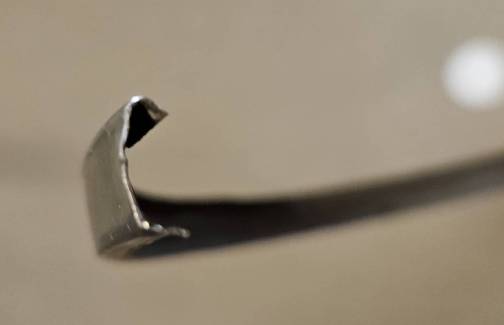
Photo 2. Original clamp ring removed.
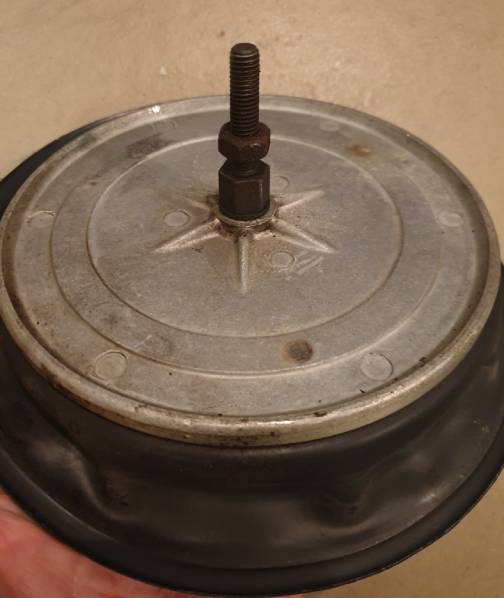
Photo 3. Aluminum plate.
Next, separate the two halves of the servo, and hold the membrane between them in your hand with two metal plates in the middle. Now unscrew the two aluminum plates in the middle of the membrane, and you will be holding the object of your desire.
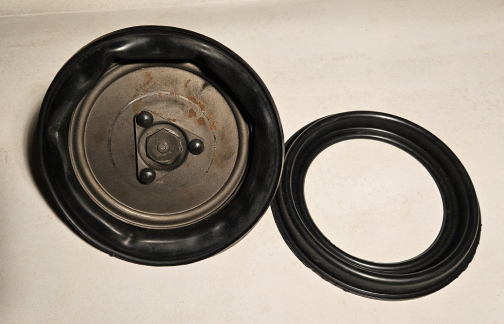
Photo 4. Old membrane and plate on left, new reproduction membrane on right.
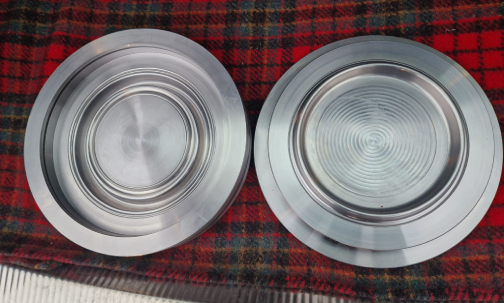
Photo 5. Mold for the membrane was made from a 3D drawing.
We measured the membrane, and created a 3D drawing, which served as the basis for manufacturing a vulcanization mold on a lathe. Initial test membranes were produced, which led to the realization that some reworking of the mold was still necessary. The mold was then taken to a manufacturer of rubber membranes here in Germany, which is also a supplier to the German automotive industry. We have now had several membranes reproduced here. Subsequently, 300,000 switching operations were simulated on a test bench. The test membrane survived this without any visible damage or wear.
The two metal plates can then be mounted back onto the diaphragm. It is then inserted into one half of the canister shell, and the other half closes the servo canister again. Finally, the metal ring must be reattached. This is not entirely straightforward if you want to reuse the old original ring. However, there is a simple solution that is very well suited for DIY use. We found various clamping rings that can be easily screwed on. All three function in the same way, but their appearance differs slightly. These were originally used to close brake booster canisters. They are available in black or yellow zinc plated.
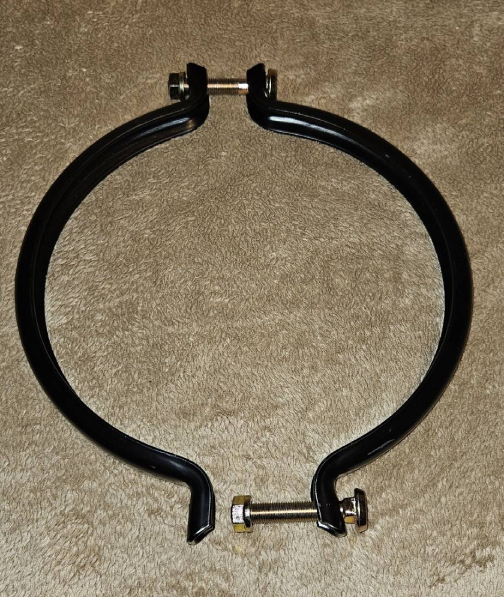
Photo 6. New clamp ring (black).
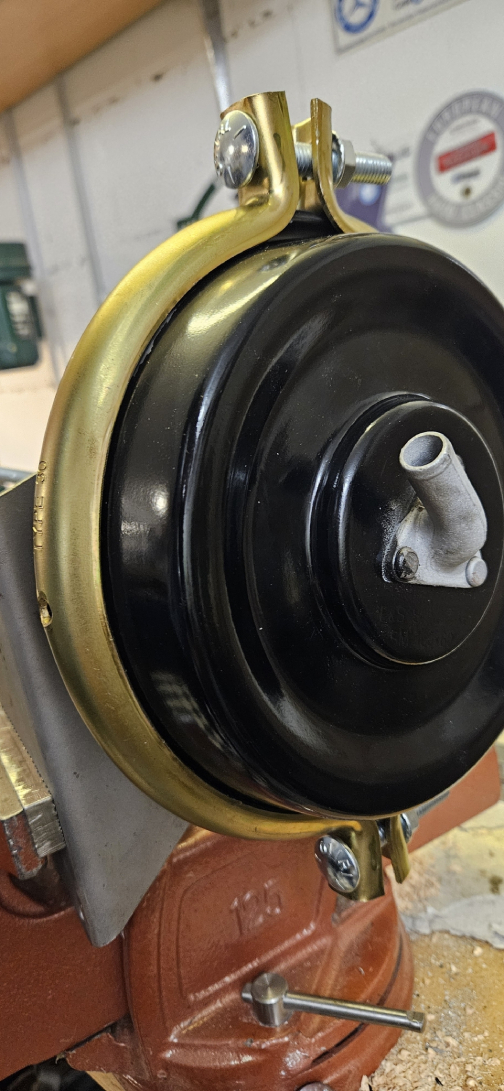
Photo 7. New clamp ring (yellow zinc plated).
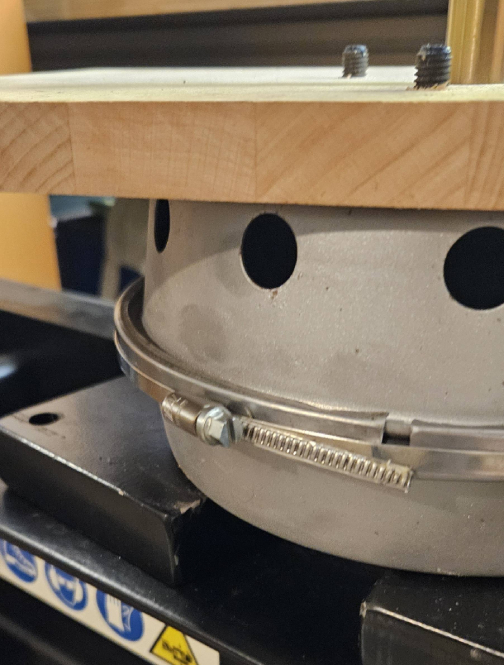
Photo 8. To reuse the original clamp we used a press with a wooden plate on top to seal the canister.
As mentioned, it becomes a little more complicated if you want to reuse the original ring. To do this, we placed the Hydrak canister in a hydraulic press with a wooden plate on top. Then by applying light pressure to the wooden plate with the press, the old clamp ring can be placed back around the pressure canister. To hold it in place, I attached a suitable hose clamp around the clamp ring itself.
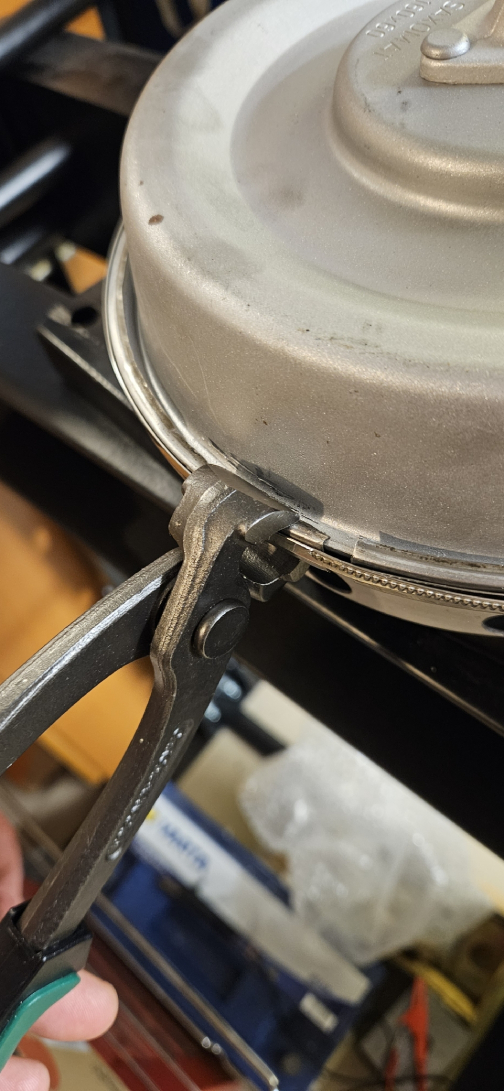
Photo 9. Using pliers to close the flared clamp ring.
Once it is held in position, start to close the flared clamp ring around the edges of the two canister halves again using narrow pliers. You may need to modify/shorten the cutting edges of your pliers slightly for this task. Finally it has to be noted that marks from your pliers will be seen on the clamp ring. However, after the canister has been replaced in the engine bay they should hardly be recognized.
If you reside in the USA, try searching the web for alternative repair options. Currently, there is a company that offers a complete rebuilding of the servo canister.
Link to the rebuild service in USA: Apple Hydraulics. As of March 2026, the rebuild service costs $645.
At the time of this writing (March 2026), we have diaphragms for sale, including one clamp ring. Shipping is possible in most countries at extra cost, and does not include possible import duties. The offer is available in the Mercedes-Benz Ponton Swap Meet section of this website.
Best regards,
Detlef Gonzalez
Bergisch Gladbach, Germany
starhunter220S@yahoo.com
Created: March 6, 2026 / Jeff Miller
Last Update:
October 12, 2026
© www.mbzponton.org
Return to the Ponton Workshop page
Return to the Mercedes Ponton page